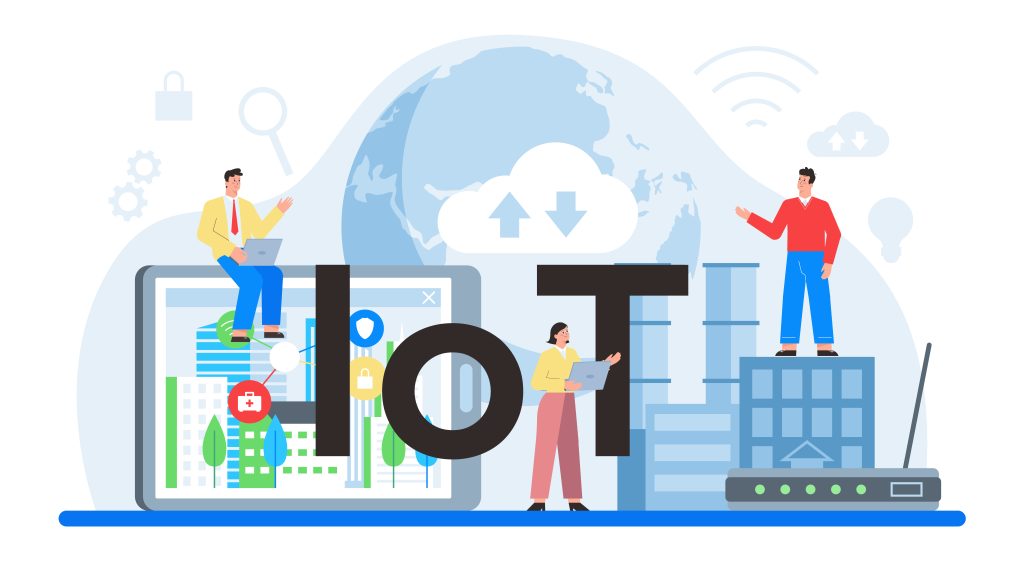
Architecture for a Fully Connected Physical World
Our Core Embedded Systems & IoT Capabilities
We build end-to-end connected systems engineered to gather real-time data, optimize physical utility, and interact flawlessly with cloud software networks:
- Custom Firmware & Micro-Controller Development: Writing low-level, highly optimized C/C++ and Rust firmware for micro-controllers (STM32, ESP32, Arduino platforms) to guarantee low latency, real-time data processing, and minimal power consumption.
- IoT Cloud Architecture & Infrastructure: Building secure, distributed messaging networks utilizing MQTT and WebSockets. We establish high-capacity backend structures built on modern frameworks to comfortably manage global device fleets and incoming sensor telemetry.
- Smart Environments & Experiential Hardware: Engineering customized sensors, physical controllers, and automated modules specifically for immersive retail pop-ups, smart home setups, and automated experiential activations.
- Sensor Integration & Telemetry Pipelines: Flawless interfacing with comprehensive sensor arrays—including GPS tracking modules, environmental diagnostics (temperature, humidity, air quality), biometric wearables, and industrial actuators.
- Device Lifecycle Management & Over-the-Air (OTA) Updates: Setting up reliable, encrypted OTA update channels to allow your distributed hardware fleet to receive firmware bug fixes and security patches remotely without ever needing physical maintenance.
Our Hardware-to-Cloud Deployment Process
Bringing an IoT product or connected experience to life demands a rigorous, phased engineering approach to balance physical stability with software scalability.
Hardware Discovery & Requirements
We analyze your operational objectives to define the core system requirements—mapping out power constraints (battery or mains), wireless communication choices (Wi-Fi, Bluetooth LE, cellular, or LoRaWAN), and sensor specifications.
Firmware Engineering & Prototyping
Our engineers program the microcontrollers and assemble initial physical board setups, writing clean code to manage peripheral inputs, optimize power consumption profiles, and handle edge-data filtering.
Cloud Synchronization & API Integration
We build out the secure gateway infrastructure. Our software team establishes the cloud databases and APIs necessary to receive device data streams, translating raw hardware bits into clear digital dashboards and mobile app commands.
Stress Testing & Fleet Deployment
Before field deployment, we run rigorous hardware-in-the-loop (HIL) stress testing to evaluate performance under extreme environmental conditions and simulate heavy network traffic to confirm that your cloud stack remains rock-solid as your device fleet expands.